
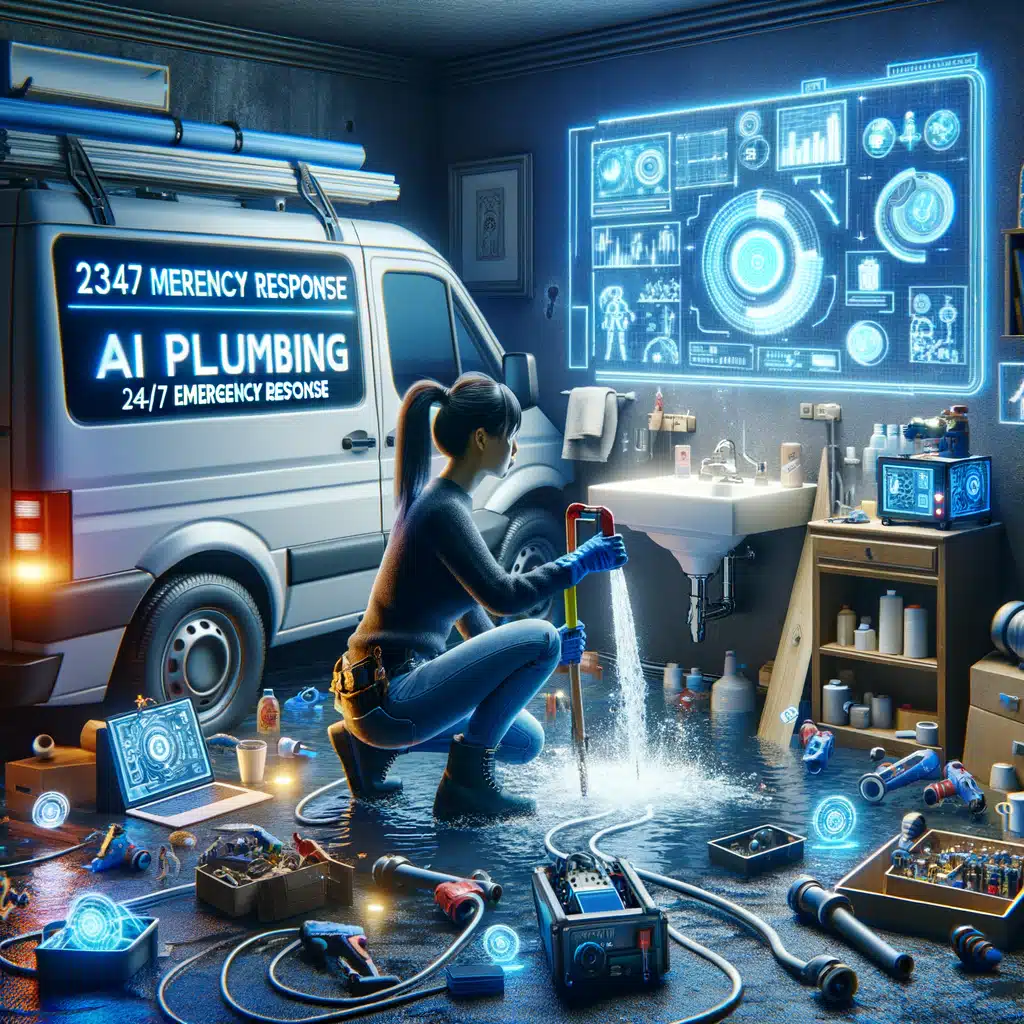
AI plumbing marketing is transforming how the modern home service business handles late-night leaks and burst pipes by enabling reliable 24/7 emergency response through smart automation. Instead of relying on luck or a sleepy on-call dispatcher, plumbing companies can now capture, triage, and book urgent jobs around the clock—and do it with speed, accuracy, and a great customer experience.
Why it matters: in emergencies, customers call the first credible option that answers. If your phone goes to voicemail or your web form takes hours to trigger a follow-up, you’re losing the job—and potentially the customer for life. With the right system, your brand can be the reassuring voice that picks up immediately, gathers the right details, and gets a tech rolling. Learn more about our AI-powered approach to home services.
AI plumbing marketing for 24/7 emergency response
Successful AI plumbing marketing isn’t just about answering phones—it’s about building a complete emergency response ecosystem that never sleeps. This approach blends automation with human expertise to ensure the right technician with the right tools reaches the right job, faster.

How always-on emergency response changes the game
- Stops lead leakage after hours. Many plumbing emergencies happen outside of business hours. A rapid response window (under 60 seconds) can be the difference between a booked job and a lost opportunity.
- Increases average ticket value. Fast triage sets expectations, pre-qualifies work, and reduces no-shows—leading to higher close rates and more profitable dispatches.
- Elevates your brand. Consistent, helpful communication wins reviews, referrals, and repeat business.
Core components of effective AI plumbing marketing
- Smart intake everywhere: AI-powered chat on your website, Google Business Profile messages, SMS, and social DMs that capture name, address, issue, and urgency in seconds.
- Missed-call text-back: If a call is missed, an automated SMS replies instantly, offering to continue via text or book a slot.
- Intelligent call routing: Voice AI or IVR triages emergencies first, routes to on-call staff, or books directly into your scheduling system.
- Dynamic triage: Guided questions identify red flags (e.g., active flooding, sewer backup, gas smell) and trigger the right escalation path.
- Real-time scheduling: Integrations with your CRM and dispatch tools show availability, assign on-call techs, and provide ETA windows.
- Transparent pricing and expectations: Automation sends digital confirmations, FAQs, and after-hours rates so customers know what to expect.
- Review and follow-up workflows: Post-job messages request feedback and encourage reviews while nurturing future maintenance work.
According to OSHA emergency preparedness guidelines, proper emergency response protocols are critical for workplace safety, and the same principles apply to home service emergencies.
How AI prioritizes true emergencies
Not every call is equally urgent. AI-driven scoring helps sort what needs an immediate truck roll from what can be booked for morning.
Signals used for prioritization:
- Keywords and context: “Water gushing,” “sewage backing up,” “no hot water,” “frozen pipes,” “smell of gas.”
- Location and proximity: Geofencing to match the nearest on-call technician and optimize travel time.
- Customer profile: Service agreement customers may get VIP routing or waived fees.
- Time sensitivity: After-hours messages can auto-offer a paid emergency slot versus the first morning appointment.
Emergency response automation in action: three playbooks
1) Burst pipe or major leak
- Intake: Confirm shut-off status; send a link with instructions to locate the main water shut-off.
- Triage: If water is still flowing, mark as top priority and dispatch immediately.
- Communication: SMS confirmation with technician ETA and safety tips.
- Aftercare: Automated follow-up offering water damage inspection and moisture testing.
2) Sewer line backup
- Intake: Ask about multiple fixtures backing up and presence of odors.
- Triage: Flag as health hazard; prioritize within the hour.
- Communication: Share pre-arrival checklist (clear access to clean-out, pets secured).
- Aftercare: Post-visit automation offers camera inspection and root cause report.
3) No hot water in winter
- Intake: System type (tank vs. tankless), error codes, age of unit.
- Triage: Prioritize if elderly or vulnerable residents are present.
- Communication: Provide temporary safety guidance; offer same-day or first-slot booking.
- Aftercare: Automated quote for replacement if age/condition suggests end-of-life.
For water damage emergencies, FEMA’s flood preparedness resources provide essential guidance on minimizing damage and ensuring safety. Check out our latest insights on home service automation for more practical strategies.
Channels that drive more emergency jobs
- Google Local Services Ads (LSA): Pair “24/7 plumber” targeting with instant-response workflows. AI can reply to LSA messages within seconds.
- Paid search with ad scheduling: Boost bids after hours; send clicks to a conversion-optimized landing page with chat-first design.
- Google Business Profile messaging: Turn on and staff with AI plus human escalation.
- Click-to-text from search: Many customers prefer text at 1 a.m.; make that path obvious.
- Website chat widgets: Train on your services, coverage area, and pricing rules to pre-qualify and book.
- Automation-friendly phone tree: A simple “If this is an active water leak, press 1” can trigger immediate routing and SMS backup.
Best practices for the home service business stack
- CRM and dispatch: ServiceTitan, Housecall Pro, Jobber—ensure your AI integrates for real-time booking and job tagging.
- Communications: Twilio, MessageBird, or similar for SMS, voice, and call flows.
- Workflow automation: Zapier or Make to connect ads, forms, chat, and CRM.
- Knowledge base: A structured library of FAQs, pricing rules, coverage areas, and escalation protocols for accurate AI responses.
- Analytics: Track response time, booked job rate, cost per lead, and revenue per emergency job.
Operational guardrails and compliance
- Safety-first scripting: If there’s a gas smell, instruct the customer to evacuate and call emergency services before anything else.
- Transparent after-hours pricing: Send fees upfront to reduce disputes.
- Consent and privacy: Capture opt-in for SMS; securely store PII.
- Human-in-the-loop: For high-risk scenarios or uncertain triage, escalate to a live dispatcher.
Metrics that matter (and how AI improves them)
- Speed-to-answer: Target under 30 seconds for calls; under 15 seconds for chat/SMS. Automation excels here.
- Lead-to-booked rate: AI increases completion of intake and reduces friction.
- After-hours booking ratio: Baseline your current number; aim to double through better capture.
- First-contact resolution: More jobs scheduled on the first touch means fewer callbacks.
- Review velocity: Automated, well-timed review requests post-emergency improve local rankings and trust.
Implementation roadmap
- Audit the journey: Map every after-hours touchpoint—ads, phone, chat, forms—and identify leaks.
- Centralize data: Sync service areas, on-call rotations, pricing, and appointment slots.
- Build triage trees: Define emergency categories, scripts, and escalation criteria.
- Pilot and refine: Start with website chat + missed-call text-back, then add voice AI and LSA messaging.
- Train the team: Teach dispatch and techs how automation hands off, and how to update statuses in the CRM.
- Iterate weekly: Review call transcripts, booking outcomes, and customer feedback. Adjust prompts, ads, and routing.
Need help implementing these strategies? Contact our team to learn how we can optimize your emergency response system.
Common pitfalls to avoid
- Over-automation: Always provide an option to connect with a human fast.
- Inconsistent quotes: Lock your pricing logic; don’t let AI improvise beyond approved ranges.
- Slow handoffs: If AI books a job, ensure dispatch and techs get instant notifications.
- Language gaps: Offer multilingual intake where possible for your market.
- Weak follow-through: After the emergency, nurture the relationship—maintenance plans and replacements are where lifetime value grows.
A quick result snapshot
A mid-market plumbing company implemented chat/SMS intake, missed-call text-back, and LSA message automation tied to their CRM. Within 60 days:
- After-hours booking rate rose from 18% to 44%.
- Average time-to-first-response dropped from 6 minutes to under 20 seconds.
- Review volume increased 2.3x, with “quick response” cited in 61% of new reviews.
- Revenue from emergency jobs grew 37% with no added headcount.
Final takeaway: AI plumbing marketing done right
Effective AI plumbing marketing isn’t just about flashy tech—it’s about building a dependable emergency response engine that meets customers in their moment of need. By combining automation with clear protocols and human expertise, your home service business can answer faster, triage smarter, book more profitably, and turn emergencies into long-term loyalty. If you’re ready to capture more late-night calls and protect your margins, start by tightening your intake, connecting your systems, and letting ai plumbing marketing handle the heavy lifting while your team focuses on exceptional service.






0 Comments