
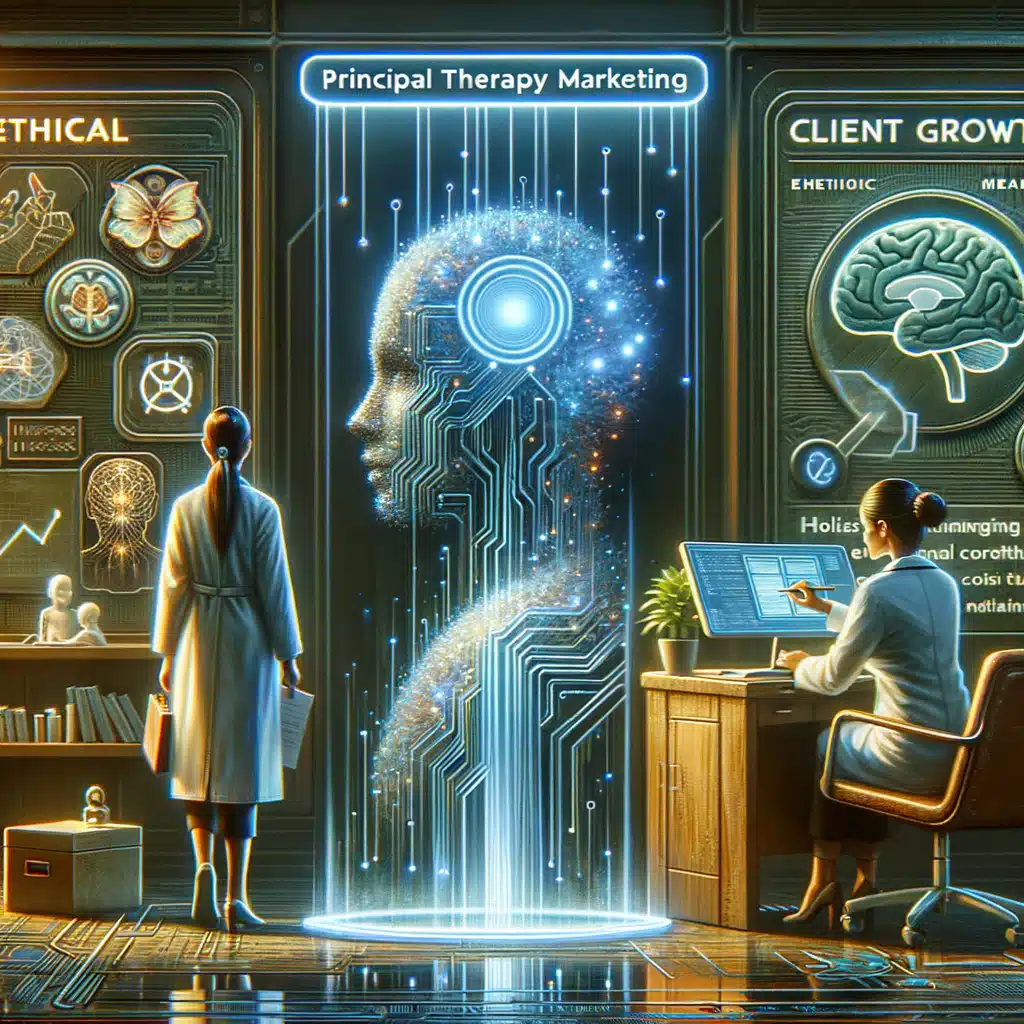
- What AI therapy marketing means for clinicians
- Principles for ethical client attraction
- AI therapy marketing tactics that work—and respect boundaries
- Search-friendly, client-centered content
- Privacy-first automation
- Transparent chatbots and intake flows
- Advertising with guardrails
- Inclusive design and bias checks
- Building “exclusive” value without manipulation
- Metrics that matter for ethical growth
- A 90-day ethical AI action plan
- Common pitfalls to avoid
- Final thoughts
Ethical AI Strategies to Grow a Therapy Practice Without Losing Trust
AI therapy marketing is reshaping how practices connect with the right clients, streamline operations, and sustain growth—all while preserving compassion and clinical integrity. Done well, it can help a solo clinician or a group practice reach people who genuinely need their services, reduce admin load, and strengthen trust at every touchpoint. Done poorly, it can feel manipulative, violate privacy, or overpromise results. The goal is to use technology as a bridge to care, not a substitute for it.
What AI therapy marketing best practices mean for clinicians
At its core, AI therapy marketing uses data-informed tools to improve relevance, accessibility, and timeliness. Think of it as augmenting—not replacing—human judgment. For a mental health professional, the most valuable applications include:
- Crafting clear, empathetic content that answers real client questions
- Improving website findability with search insights
- Automating routine tasks like appointment reminders and follow-ups
- Personalizing communication based on consented preferences
- Ensuring that people in need can reach the right clinician faster
Principles for ethical client attraction
Ethical client attraction puts safety and autonomy first. Anchor your approach in these principles as recommended by the American Psychological Association’s Ethics Code:
- Transparency: Disclose when and how AI is used
- Consent and control: Offer opt-in for messaging and personalization
- Privacy-by-design: Use HIPAA-aligned platforms where applicable
- Non-exploitation: No fear-based marketing or pressure tactics
- Equity and inclusion: Design accessible and bias-aware processes
- Clinical boundaries: Marketing educates but does not diagnose or treat
AI therapy marketing tactics that work—and respect boundaries
Search-friendly, client-centered content
Use AI to generate outlines, FAQs, and keyword variations for pages on anxiety, trauma, couples work, or ADHD, then refine with your clinical voice. Prioritize clear explanations of modalities (CBT, EMDR, EFT) in plain language. Always human-edit for accuracy and empathy.
Privacy-first automation
Automate appointment confirmations, no-show follow-ups, and referral coordination with HIPAA-aligned tools. Keep sensitive details out of email and use secure portals for PHI. Limit integrations to those with business associate agreements (BAAs).
Transparent chatbots and intake flows
AI chatbots can answer common questions and help prospective clients self-triage. Prominently display that the bot is not clinical care and cannot handle emergencies. Provide crisis resources at the start and end of interactions.
Advertising with guardrails
AI-enhanced ad platforms can find people searching for therapy, but sensitivity is vital. Use neutral language, emphasize informed choice about fees and availability, and direct ads to educational landing pages with clear next steps.
Inclusive design and bias checks
AI models can mirror societal biases. Review imagery and language for cultural sensitivity, offer content in multiple languages where possible, and test chatbots for equity in responses across names and dialects.
Building “exclusive” value without manipulation
Exclusivity can be ethical when it means clearly defined programs with limited capacity, not artificial scarcity. Offer small-group programs with transparent limits and create clinician-matched pathways.
Metrics that matter for ethical growth
Measure what reflects client well-being and practice sustainability—not vanity metrics:
- Findability: organic search traffic, local rankings
- Fit and access: percentage of ideal client inquiries
- Engagement quality: page depth, resource downloads
- Safety and trust: complaint rates, privacy incidents
- Outcomes proxy: attendance consistency and onboarding satisfaction
A 90-day ethical AI action plan
Days 1–30: Foundations – Map ideal client profiles, audit privacy (BAAs, forms, consent), draft responsible AI statement
Days 31–60: Content and systems – Publish authoritative service pages, implement HIPAA-aligned reminders
Days 61–90: Optimize and scale – Launch targeted ads, add consent-based email series, review metrics and feedback
Common pitfalls to avoid
- Overpromising outcomes or implying guaranteed results
- Collecting unnecessary data or storing it insecurely
- Letting AI draft clinical advice or crisis guidance
- Hiding fees or availability information
- Using urgency countdowns without honest basis
- Neglecting accessibility features
Final thoughts
For any mental health professional, the future of marketing isn’t louder—it’s kinder, clearer, and more precise. With a privacy-first mindset, transparent AI use, and respect for client autonomy, you can attract the right clients and build durable trust. Technology becomes ethical when it amplifies your clinical values.







0 Comments